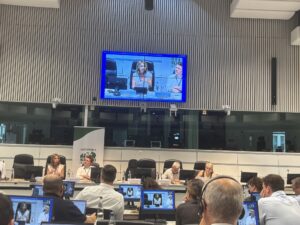
Simplifying European environmental regulations can be a decisive factor in encouraging new investment in the livestock sector and strengthening its competitiveness. This was one of the main conclusions reached at the recent meeting of the European Parliament’s Intergroup on Sustainable Livestock Farming, which focused on analyzing how EU regulations can support the modernization of the sector without creating unnecessary barriers. ANAFRIC, represented by Rosa Solanes, delegate from our European office, was present.
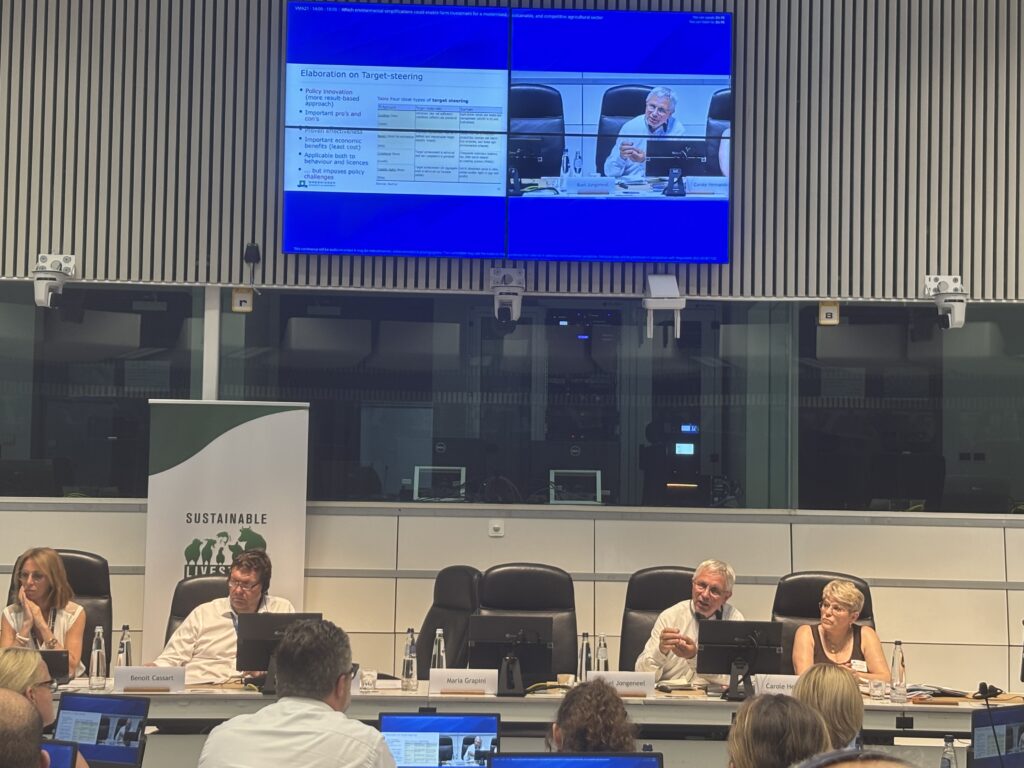
The session, chaired by MEP Benoît Cassart, highlighted the need to move towards sustainable competitiveness, combining ambitious environmental objectives with realistic policies that allow farms to continue investing, innovating, and growing.
During the meeting, it was emphasized that the transition to increasingly sustainable production models requires a balanced regulatory framework, capable of incentivizing investment and not hindering the development of a sector that is strategic for European food security.
Omnibus Legislative Package VII
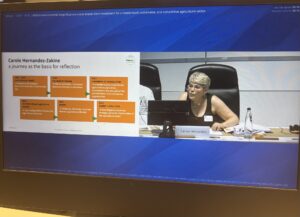
One of the central points of the meeting was the presentation, by Claudia Fusco, Director of the European Commission’s Directorate-General for the Environment, of the Omnibus Legislative Package VII, which incorporates simplification measures in several environmental regulations.
Among the most relevant proposals for the livestock sector are the simplification of obligations related to industrial emissions, the streamlining of environmental impact assessment procedures, and faster processing of administrative permits.
The European Commission has also raised the possibility of exempting certain livestock operators from some reporting obligations related to industrial emissions regulations, a measure that could reduce bureaucratic burdens and facilitate business activity without compromising environmental objectives.
At ANAFRIC, we welcome any initiative that contributes to building a more efficient regulatory framework, capable of reconciling sustainability, competitiveness, and economic viability. The European livestock sector needs legal certainty and policies that support investment in order to continue moving towards a modern, innovative model that is committed to the territory.