The FERTIMANURE initiative has developed innovative solutions to transform manure into bio-based fertilizers, reducing dependence on mineral fertilizers and promoting a circular economy.
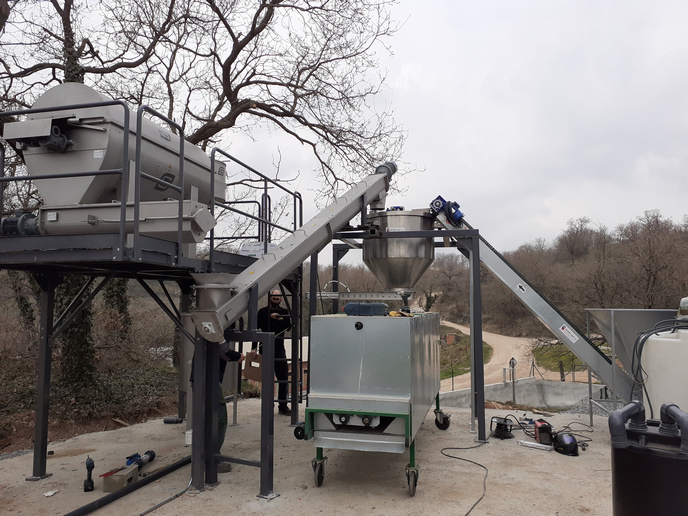
Livestock manure can become a strategic resource for the agriculture of the future. This is one of the main conclusions of the European project FERTIMANURE, funded by the European Union, which has developed new technologies to transform livestock waste into bio-based fertilizers with commercial potential.
The project was launched to address two major challenges: Europe’s dependence on imported mineral fertilizers and the sustainable management of excess manure generated by livestock farms.
During the project, five pilot projects were carried out in Belgium, Germany, Spain, France, and the Netherlands, where essential nutrients such as nitrogen, phosphorus, and potassium were successfully recovered to produce fertilizers capable of competing with conventional products. In the Netherlands, the developed system has proven to be technically and economically viable, becoming a permanent installation.
Furthermore, FERTIMANURE identified 18 bio-based fertilizers with commercial potential, several of which already comply with European regulations on fertilizer products. The project also developed tools that allow for the formulation of fertilizers specific to each soil type and crop, improving their efficiency and facilitating their application by farmers.
Beyond the research, the initiative has created technical, regulatory, and business tools to facilitate the implementation of these solutions in the market and promote knowledge transfer among farmers, companies, and government agencies.
The results of FERTIMANURE highlight the potential of livestock farming to become a key player in the circular economy, transforming a byproduct like manure into a high-value-added resource that contributes to more sustainable, efficient agriculture that is less dependent on external raw materials.
Source: European Project FERTIMANURE – European Union.