
University degrees linked to the field are gaining students again after several years of decline. This is what Diario de León reports in a report on a study by the Universidad Católica de Ávila, published in the magazine Education Sciences, which analyzes the evolution of agricultural engineering in Spain during the last decade.
Between the 2020-2021 and 2024-2025 academic years, Agricultural and Agri-Food Engineering went from 3,370 to 3,984 students, while Agricultural, Livestock and Rural Engineering rose from 3,859 to 4,607. Both degrees reached their maximum number of new admissions in the studied series in the last year analyzed, with 1,113 and 1,186 students, respectively.
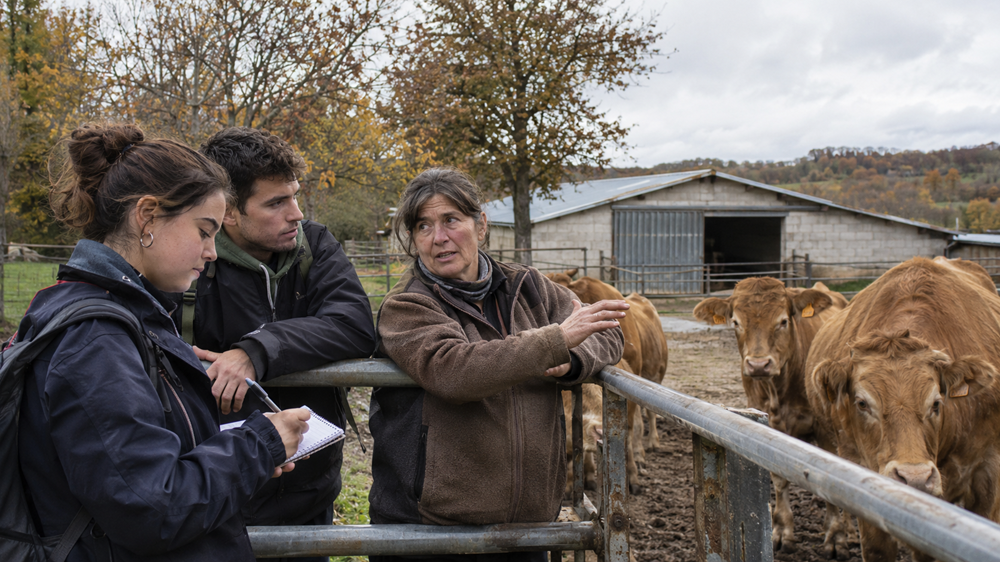
The researchers point out that this upswing could be related to the interest in fields such as the digitization of farms, precision agriculture, sustainability and food security. The recovery in enrollment is still not reflected to the same extent in the number of graduates, which is below the maximum recorded in 2016-2017.
The challenge of attracting and retaining talent in rural areas
The evolution in Castilla y León shows that the national recovery is uneven. In Agricultural, Livestock and Rural Engineering, the community went from concentrating almost 22% of Spanish students in 2015-2016 to less than 14% in 2024-2025. The study relates this weight loss to the aging of the population and the departure of young people to study or work in other territories. Female participation is also limited, with around a third of students in the grades analyzed.
For livestock and the meat industry, the increase in enrollments opens up an opportunity to incorporate technical profiles that contribute to modernizing farms and production processes. The challenge of the generational shift also involves the fact that these future professionals find opportunities for employment and business development in the areas where livestock and agri-food activity is concentrated.