The association asks the next Government for a national sustainable livestock strategy, a proportionate regulatory framework and a firm defense of the competitiveness of Spanish companies in the face of international commercial challenges.
Before the general elections on November 29th, ANAFRIC calls on all political parties to make a firm commitment to one of the strategic sectors of the Spanish economy: livestock and the meat industry.
The association believes that the next Government should approach the future of the sector from a comprehensive and long-term vision, recognizing its economic, industrial, business and territorial dimension. It is not only about maintaining a productive activity, but about guaranteeing the continuity of thousands of companies, farms and jobs that contribute to the food supply, the national economy and the international projection of Spain.
The Spanish meat industry is made up of more than 3,000 companies and its total economic contribution exceeds 44,370 million euros of gross added value, equivalent to 2.8% of the national GDP. In addition, meat exports will exceed 12,360 million euros in 2025.
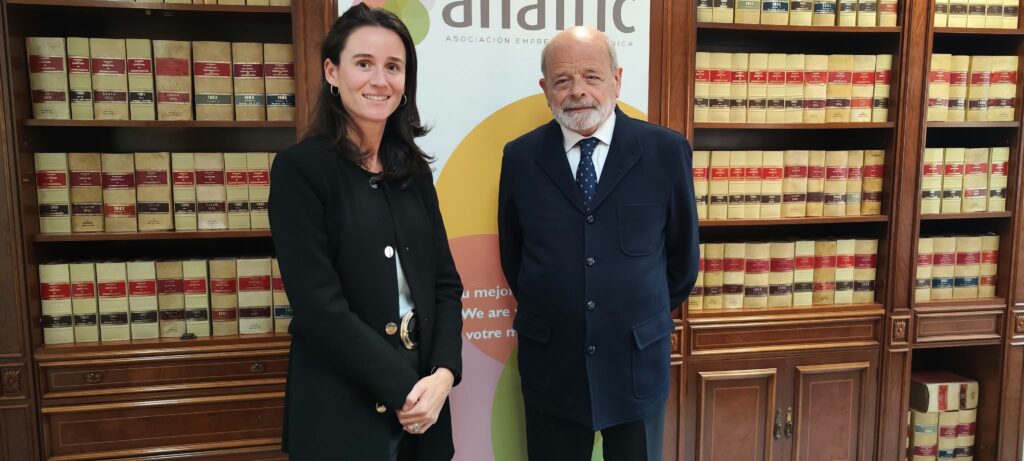
“We are Marca España. Behind these figures are companies, workers, families and territories that depend on an activity that is part of our economic and industrial structure. The sector needs political decisions to recognize this reality and for its future to occupy a priority place on the agenda of the next Government”, says José Friguls, president of ANAFRIC.
A national strategy to guarantee the future of the sector
ANAFRIC considers it essential to move from institutional recognition to a policy of concrete measures that will guarantee the viability and competitiveness of the entire livestock and meat chain.
Therefore, it proposes to promote a Spanish Livestock Strategy, adapted to the productive reality of our country and equipped with financing, measurable objectives and execution periods.
In a context in which the European Union is working on the development of a community livestock strategy aimed at building a resilient, competitive and sustainable livestock sector, which adjusts to territorial diversity and values European excellence, Spain must begin to define the main lines of its own meat livestock model.
The objective is that the particularities, needs and priorities of our country are present in all European debates and contribute to shaping future community policies. This strategy must consider the three dimensions of sustainability—environmental, economic and social—and favor generational succession, the continuity of farms, innovation, technological modernization and business competitiveness.
The association defends that there cannot be a sustainable livestock industry without profitable farms, competitive companies and employment opportunities for the next generations. The strategy must incorporate all the links in the chain, from production and fattening to slaughter, cutting, processing and marketing.
Less regulatory burdens and rules adapted to business reality
The competitiveness of the sector also requires a regulatory framework that is proportionate, stable and adapted to the reality of companies. ANAFRIC calls for reducing administrative burdens, avoiding duplication and revising those obligations that generate costs and procedures that do not always respond to the current needs of productive activity.
In this context, the association considers the revision of the European regulations on Specified Risk Materials (MER), especially in the bovine sector, a priority. After more than two decades of application, ANAFRIC asks to update the requirements in the light of scientific advances and the evolution of the health situation, maintaining at all times the maximum guarantees of food safety and public health protection.
The association considers that regulation should be based on scientific evidence and apply proportionality criteria, preventing companies from having to assume costs and procedures that are no longer justified.
International trade yes, but under conditions of reciprocity
International trade agreements represent an opportunity for the European economy, but they also pose important challenges for sectors such as beef and sheep and goats.
ANAFRIC claims that agreements with third countries guarantee balanced conditions of competition and that imported products are subject to effective controls. The association considers it essential to advance the reciprocity of production conditions, animal welfare, sustainability and use
of veterinary medicines, as well as strengthening health and origin controls.
In relation to Mercosur, ANAFRIC calls for a comprehensive monitoring of imports, tariff quotas and their impact on European production and prices, as well as the swift activation of safeguard mechanisms when serious disturbances in the markets are proven.
Regarding the agreement between the European Union and Australia, the association considers it necessary to evaluate its consequences on the beef and sheep-goat sectors, which are especially sensitive to the entry of larger volumes of meat from third countries.
“We cannot demand from our companies constant investments to meet European standards and, at the same time, allow them to compete in unequal conditions with products from countries subject to other productive requirements. We defend international trade, but it must be balanced, transparent and fair”, says Arán Zaldívar, deputy director of the ANAFRIC Presidency.
The association asks the next Government to actively defend these interests before the European institutions and maintain a permanent dialogue with the representative organizations of the sector.
More industry, more employment and greater international presence
ANAFRIC considers that the future of the sector also depends on an industrial and business policy that favors investment, modernization, training and the ability of companies to compete in international markets.
The association claims to maintain sufficient European funding for agri-food promotion programs, especially the SIMPLE and MULTI programs, as well as to reinforce internationalization policies that facilitate the opening of new commercial destinations and the diversification of markets.
Likewise, it considers it a priority to promote professional training and qualification, improve the ability of companies to attract talent and favor a stable labor framework that allows employment and productive activity to be maintained.
For ANAFRIC, public policies must recognize the livestock and meat chain as a whole, not only from its agro-livestock dimension, but also as an industrial activity that generates added value, investment, employment and economic opportunities in numerous territories.
The next Government must assume concrete commitments
ANAFRIC considers that the upcoming elections represent an opportunity to place the livestock and meat sector at the center of the country’s economic and industrial agenda.
“We are not asking for privileges. We are asking for legal certainty, conditions to compete and a policy that takes into account the reality of our companies and workers. We cannot talk about food sovereignty, rural development or industrial competitiveness without guaranteeing the viability of those who make this activity possible. Defending livestock and the Spanish meat industry is defending an essential part of our economy and Marca España”, concludes José Friguls.
The association offers its collaboration to all political formations and to the future Government to work on an agenda of commitments that allows facing the challenges of the sector and guaranteeing its continuity and development.
The sector is prepared to continue investing, producing and generating employment. It now needs a political and regulatory framework that allows it to do so