
ANAFRIC echoes the initiative promoted by the Interprofessional Agri-Food Organisation for Sheep and Goat Meat, INTEROVIC, aimed at highlighting transhumance, an ancient livestock practice that remains alive thanks to the efforts of shepherds such as Paco Morgado and José Manuel Sánchez Miguel.
What is happening?
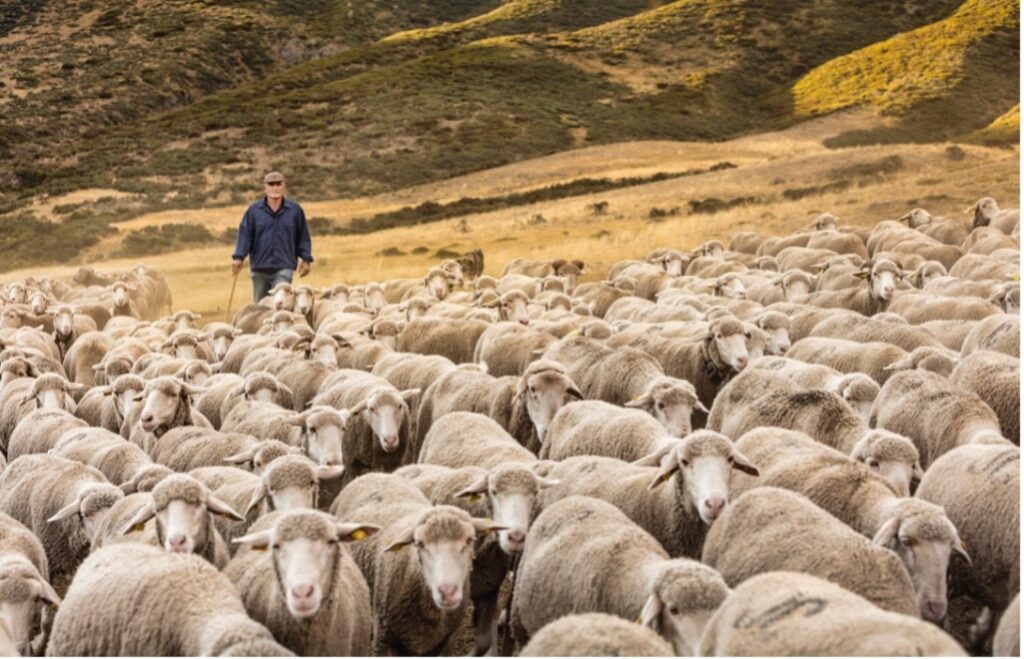
Two of the last transhumant shepherds in Spain have begun a journey on foot together with their Merino sheep flocks from Extremadura to the mountain pastures of León, in the Picos de Europa. A historic route of nearly 600 kilometres that they will travel over approximately 40 days.
The initiative is part of the European campaign “Celebrate everyday moments with lamb”, promoted by INTEROVIC, with the aim of raising awareness about the importance of extensive livestock farming and transhumance as a sustainable, resilient and territory-linked model.
Who are the protagonists?
On one hand, Paco Morgado, a 64-year-old transhumant shepherd, has been carrying out this practice for more than 25 years and this year once again travels the livestock routes accompanied by around 1,450 Merino sheep.
Alongside him, José Manuel Sánchez Miguel, aged 45, is undertaking his third consecutive transhumance journey on foot with a flock of nearly 1,700 Merino sheep.
Both represent the continuity and generational succession of a livestock activity declared Intangible Cultural Heritage of Humanity, which is becoming increasingly rare due to the lack of generational replacement and the hardship of the profession.
How do they carry out the journey?
The shepherds travel between 12 and 14 kilometres daily, adapting each stage to weather conditions, the state of the livestock routes and the needs of the animals.
The route follows the historic Cañada Leonesa Occidental and crosses different provinces and municipalities in Cáceres, Toledo, Ávila, Valladolid and León, until reaching the mountain passes near Riaño, where the flocks will remain throughout the summer.
In addition to moving livestock, transhumance provides highly significant environmental and territorial benefits:
- Prevention of forest fires through the consumption of dry vegetation.
- Natural fertilisation of the land.
- Seed dispersal and pasture regeneration.
- Conservation of livestock routes and biodiversity.
- Economic and social revitalisation of rural areas.
When is it taking place?
José Manuel Sánchez began his journey in mid-May from Cáceres, while Paco Morgado started his route a few days later from Trujillo. Both expect to complete the journey by the end of June, coinciding with the arrival of summer in the mountain areas.
After spending several months in the mountain passes of León, the shepherds will return once again to Extremadura in autumn, most likely also on foot.
Where does the transhumance take place?
The journey takes place along the historic network of royal livestock routes connecting Extremadura with the mountains of León. The final destination will be the mountain passes of Valverde de la Sierra and La Uña, in the surroundings of the Picos de Europa, in the province of León.
ANAFRIC especially values the role of extensive livestock farming and traditional practices such as transhumance, which are essential for environmental sustainability, territorial conservation and maintaining economic activity in rural areas.