
The Generalitat de Catalunya (Government of Catalonia) has approved a three-year program to strengthen the surveillance and control of African swine fever (ASF)—a disease that poses a significant health and economic threat to the pork sector.
ASF is a viral disease that affects both domestic pigs and wild boars. It is not transmissible to humans and poses no risk to human health through the consumption of meat; however, it can cause high mortality rates among animals and lead to severe economic consequences for farms, slaughterhouses, and exporting companies.
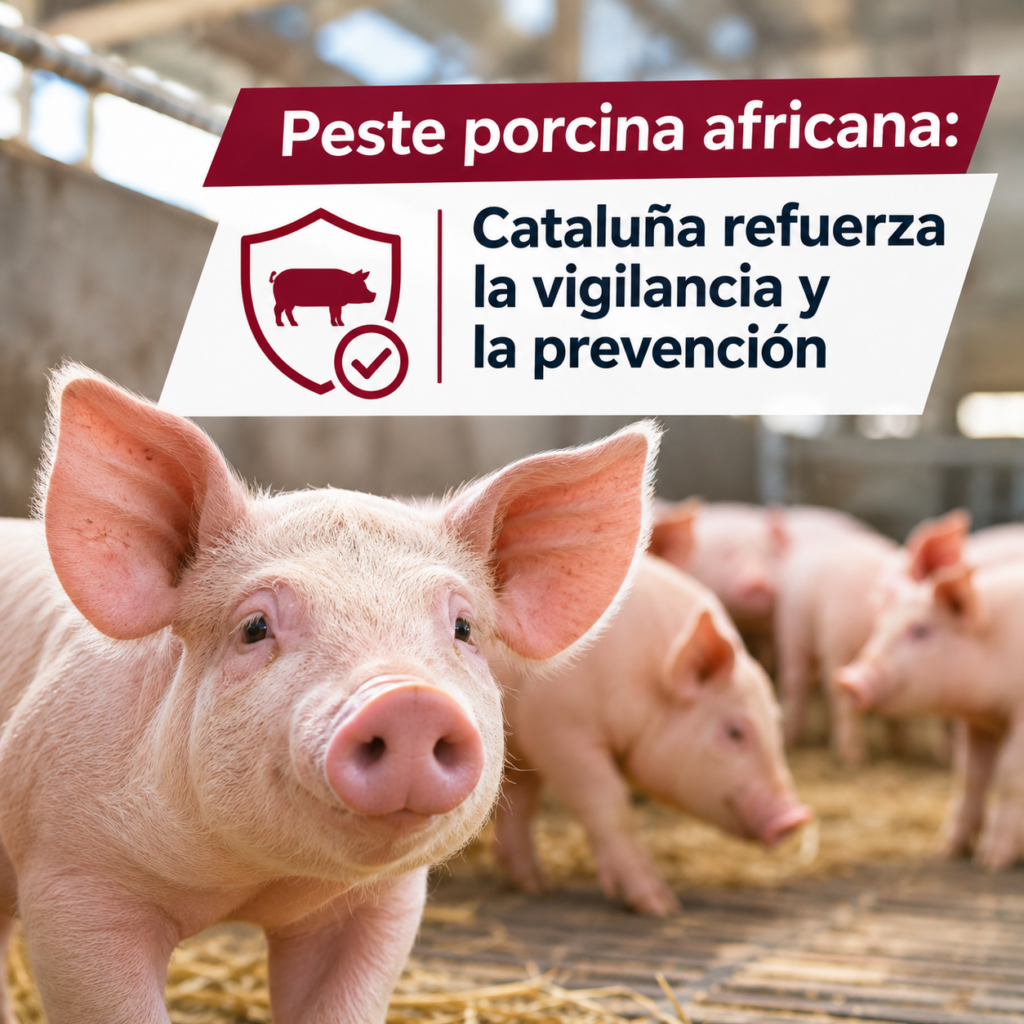
Increased surveillance and prevention to protect pork production
The three-year program will bolster health surveillance and control measures, which are essential for detecting potential cases and limiting the spread of the virus.
Prevention, on-farm biosecurity, and coordination between government authorities and industry professionals are vital for protecting pork production and mitigating the risks associated with the disease.
Animal health: a key to the sector’s competitiveness
For the livestock and meat supply chain, the fight against ASF goes beyond protecting animals. It is also crucial for sustaining economic activity, ensuring business continuity, and maintaining access to international markets.
In this context, ANAFRIC emphasizes the importance of having effective health surveillance systems, adequate resources, and ongoing coordination between government authorities and industry operators.
Source: Generalitat de Catalunya.