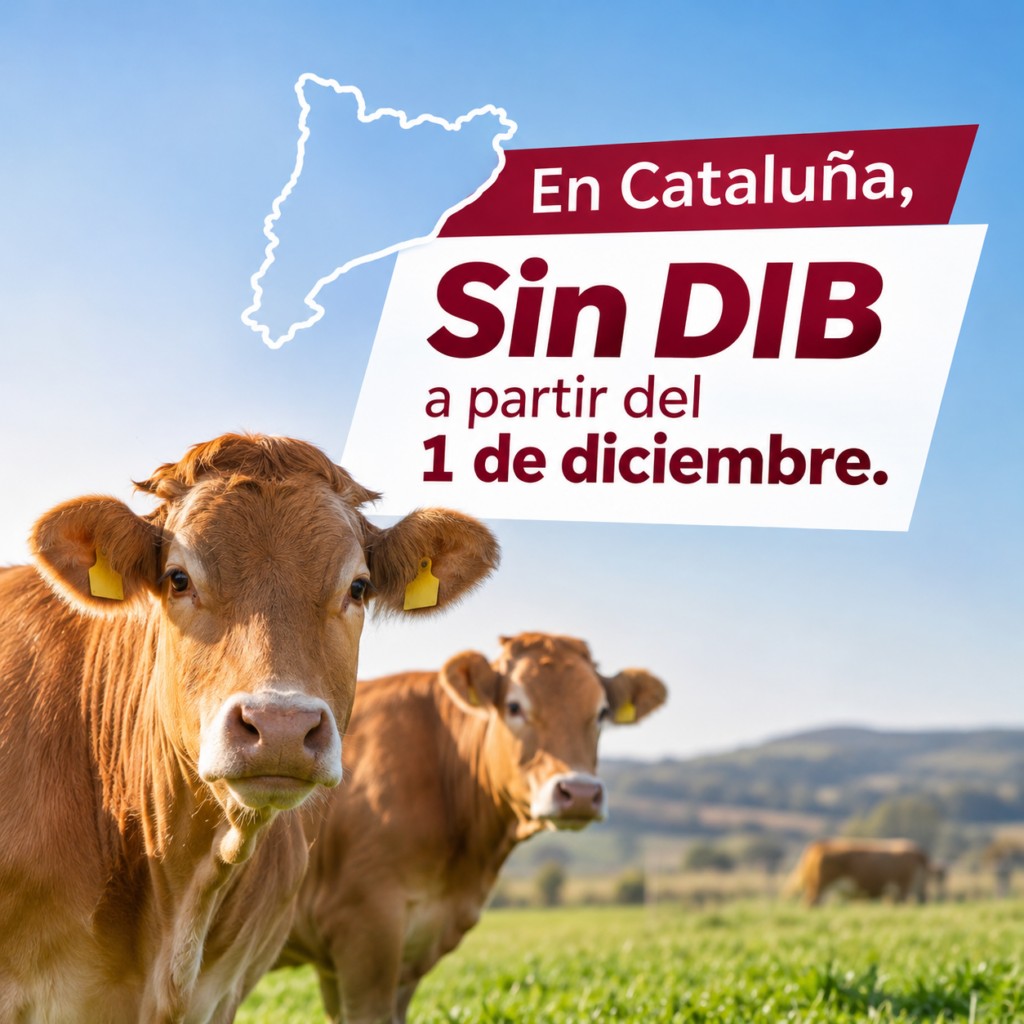
As of December 1, 2026, cattle transported from Catalan farms to slaughterhouses within Catalonia will no longer need to be accompanied by a paper Bovine Identification Document (DIB). This measure aims to reduce bureaucracy without compromising the identification and traceability of the animals.
The Department of Agriculture, Livestock, Fisheries, and Food of the Generalitat de Catalunya has announced this administrative simplification measure, which will streamline procedures related to the transport of cattle and reduce the physical documentation that farms and slaughterhouses must handle.
This initiative continues a process that began in 2022, when the requirement to present a paper DIB was eliminated for the movement of cattle between livestock farms in Catalonia.
Traceability and health controls remain in place
The elimination of the physical document does not alter the obligations regarding animal identification or the guarantees for animal traceability.
All information will remain accessible through the Livestock Telematics Management (GTR) system and the health documentation required for each movement—specifically, the Health Movement Certificate (CSM) or the Health Transport Document (DST), as applicable.
Slaughterhouses will still be able to access the data necessary for receiving and monitoring the animals, such as their individual identification code, date of birth, country of birth, and history.
A step toward administrative simplification
This measure represents progress in reducing the bureaucratic burdens affecting the livestock and meat sector—a change that ANAFRIC has been advocating for with the authorities.
Digitalization and the elimination of redundant procedures are essential for improving the efficiency and competitiveness of businesses, provided that the guarantees for food safety, animal health, and traceability are maintained.
Source: Official College of Veterinarians of Barcelona (COVB) / Generalitat de Catalunya.