
Catalonia plans to triple its biogas production to over 1,900 GWh annually by 2030, with the goal of significantly reducing methane and ammonia emissions from livestock manure management.
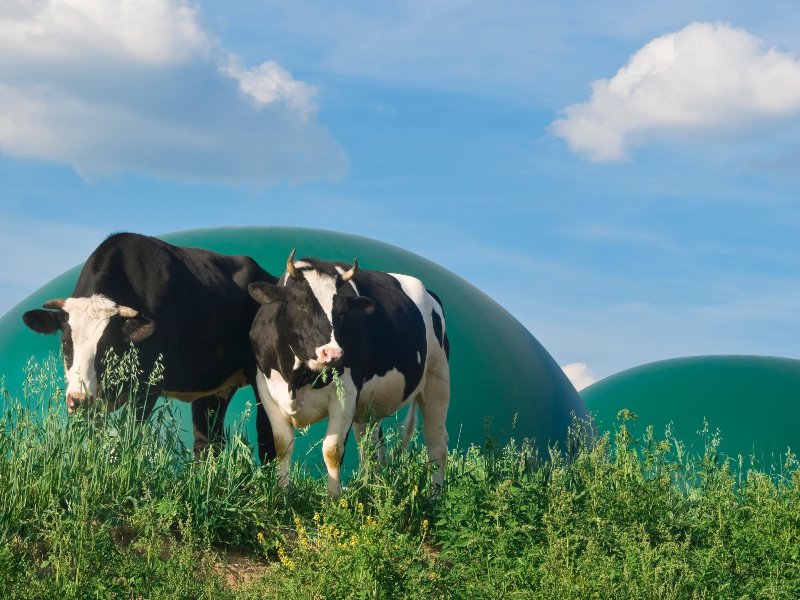
This increase will prevent the emission of more than 350,000 tons of CO₂ into the atmosphere by 2030, an amount equivalent to offsetting the annual emissions of cities like Tarragona, Girona, or Lleida.
To achieve this goal, it is estimated that it will be necessary to build either 12 biogas plants with a treatment capacity of 50,000 tons each, or 6 plants with a capacity of 100,000 tons per year.
Catalonia, a leader in the circular bioeconomy
The push for biogas is part of a strategy that allows for:
- Capturing the methane emitted during manure storage.
- Generate renewable energy.
- Recover nutrients such as nitrogen and phosphorus for use as fertilizers.
- Improve air and soil quality in rural areas.
This approach positions Catalonia as a leader in the circular bioeconomy applied to the agricultural and livestock sector.
Pilot Bioparks
The Catalunya Lidera Plan already includes the creation of three pilot bioparks in:
- Alcarràs (Segrià)
- Vallfogona de Balaguer (La Noguera)
- Montoliu de Lleida (Segrià)
These bioparks will integrate nutrient recovery systems and wastewater treatment processes, creating models that can be scaled to other regions.
International Projection
The project was presented at COP30, the 30th United Nations Climate Change Conference, held in Belém, Brazil, with the aim of sharing the Catalan model and scaling up circular bioeconomy solutions internationally.
Photo: Government of Catalonia