PROVACUNO participated from May 25 to 29 in the European Union’s High-Level Trade Mission to Thailand, led by the European Commissioner for Agriculture and Food, Christophe Hansen, along with approximately one hundred representatives from EU agri-food companies and institutions. The mission aimed to connect European companies with and increase their presence in the Thai market (population 72 million), at an opportune time and within the framework of advanced talks between the European Union and Thailand to sign a Free Trade Agreement.
Currently, beef imports from the EU into Thailand are subject to a 50% tariff, severely limiting their competitiveness compared to other sources, such as Australia, which has a bilateral free trade agreement with zero tariffs and currently dominates the Thai premium beef market. Therefore, negotiations on the tariff framework in the future free trade agreement are of great importance to the sector.
The European Union’s High-Level Trade Mission to Bangkok had a very busy agenda that included market visits, business-to-business (B2B) meetings, attendance at Thaifex Anuga Asia, and various thematic forums with the participation of high-ranking European officials.
Tariff Elimination
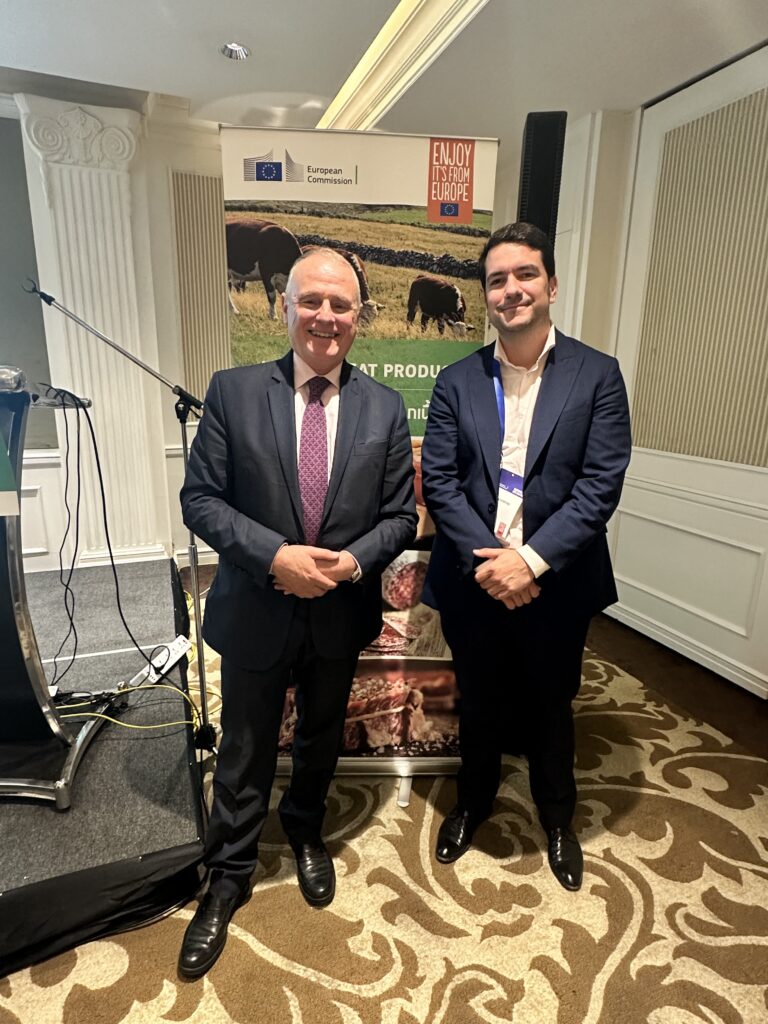
During this trip, the PROVACUNO team, comprised of Alejandro Gutiérrez, Deputy Director, and Gema Moguer, from PROVACUNO’s International Department, had the opportunity to meet directly with Commissioner Christophe Hansen, Raimondo Serra, Deputy Head of Unit of the European Commission, and Diego Canga Fano, Acting Deputy Director-General of DG AGRI of the European Commission—a significant group of high-ranking officials from the European Commission. They shared and discussed the current situation and trade opportunities, and also requested the administration’s strong support for the sector’s internationalization.
PROVACUNO has conveyed to the representatives of the European Commission that, “in order to take advantage of opportunities in this and other destinations and to be able to face other competitors, it is necessary to eliminate tariffs on European products, but also to expedite health procedures, inspection visits, and eliminate non-tariff barriers, as well as to be able to develop specific promotion programs aimed at those sectors that are suffering the most with the signing of the latest trade agreements.”