
The beef farms included in the regulations must report the data for 2026 before March 1, 2027. PROVACUNO offers, for its part, a tool to measure the carbon footprint from the farm to the industry.
Royal Decree 1004/2026, published in the BOE on November 20, updates the information that livestock farms must submit to the General Registry of Available Technical Improvements (MTD). In the case of cattle, the rule details the data that must be declared by the farms subject to this obligation in accordance with the rules governing the management of cattle farms.
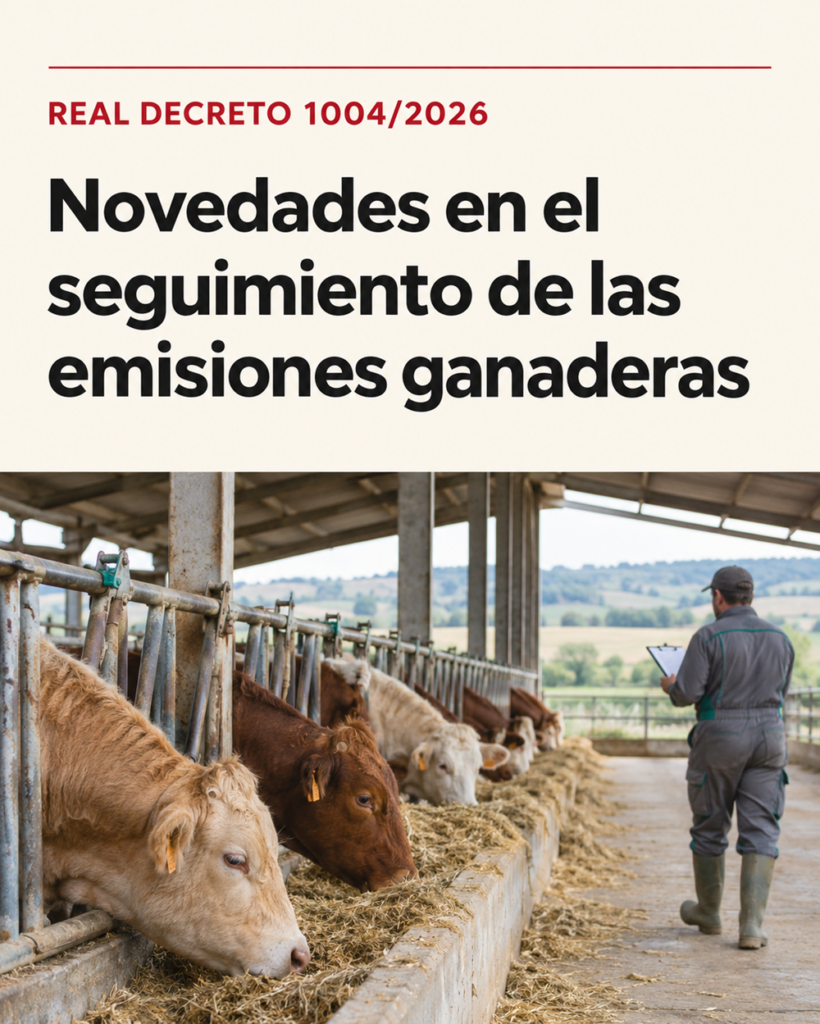
What changes for cattle farms
The main innovation is that the owners of the affected farms must report all the mandatory data in Annex I every year, even if they have not changed with respect to the previous declaration. The royal decree enters into force on January 2, 2027 and the first shipment in accordance with the new requirements must be made before March 1, 2027, with the data collected during 2026.
The data included in the annex include, depending on the type of farm, information on the animals, their feeding and the management of waste. The annual update of these data seeks to improve the calculation and monitoring of the emissions of each farm and of the sector as a whole.
Look the Real Decreto 1004/2026 at BOE
PROVACUNO expands the measurement of the carbon footprint in the industry
In parallel to the official statement, PROVACUNO has developed the Sustainable Vaccination Footprint, a tool that allows farmers and industrialists to calculate their greenhouse gas emissions and identify in which processes they can reduce them. A module for slaughterhouses and slaughterhouses has been added to the livestock module, aimed at suckler cow farms and feedlots.
The industrial module makes it possible to analyze the impact of transport, energy consumption, refrigeration, water purification and the management of waste and by-products. With this data, companies can calculate their footprint per kilogram of product, detect where the emissions are concentrated and check if the measures adopted manage to reduce them.