Drought and high temperatures are putting cattle farms in northern Spain in serious difficulty, in a territory where pastures are an essential part of livestock feeding and the extensive production model.
According to the Coordinadora de Organizaciones de Agricultores y Ganaderos (COAG), persistent heatwaves and the absence of rainfall during the first weeks of August have dried out much of the natural grassland in Galicia, Asturias, Cantabria, the Basque Country and the Cantabrian side of Navarre.
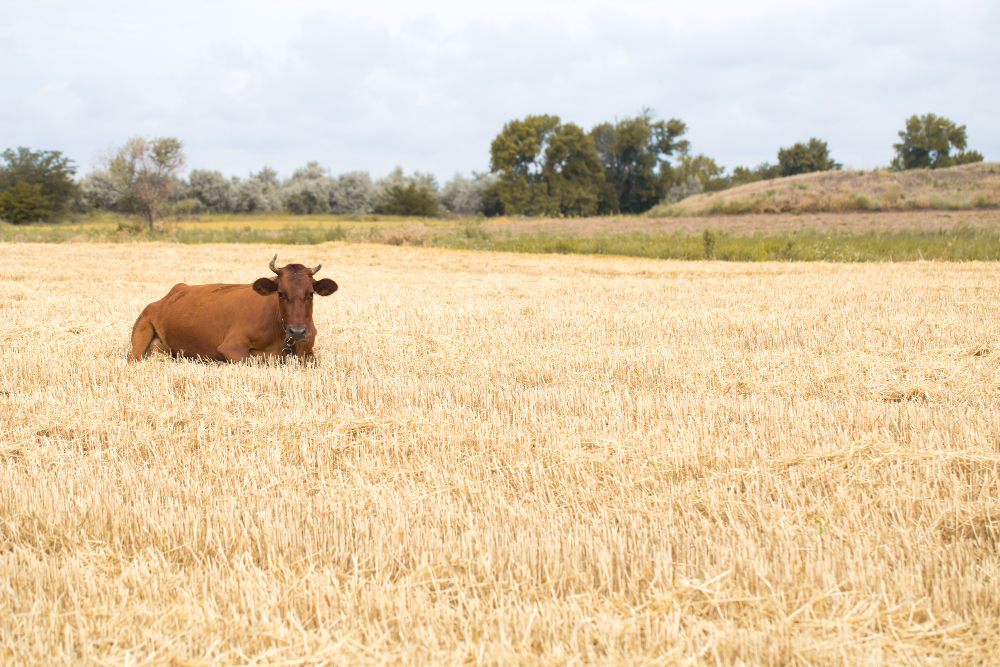
Grasslands that normally remain green until well into autumn are dry and yellowish this summer, forcing many farms to already use forage and dry grass reserves intended for autumn and winter and to supplement animal feed with compound feed.
Livestock feed costs up by as much as 32%
In addition to the lack of pasture, there has been an increase in the price of raw materials. According to COAG, cereal straw has become up to 32% more expensive in just two months, while hay and concentrates are also maintaining an upward trend.
The situation is particularly worrying because it compromises farms’ feed planning for the coming months. In some areas of Galicia, losses of more than 60% in forage crops are being reported, while in Asturias losses in maize crops intended for animal feed range between 60% and 80%.
In addition, the drought is causing water availability problems in certain areas of Cantabria and the Basque Country, where water has had to be supplied by tanker trucks to guarantee drinking water for livestock.
The risk of having to reduce herds
One of the most worrying consequences is that some livestock farmers are beginning to bring forward the sale of animals or culling due to the impossibility of maintaining livestock numbers with the available pasture and absorbing the increase in feed costs.
A forced reduction in herd numbers would have consequences extending beyond the current season. It could lead to decapitalisation of farms and reduce the production capacity of territories traditionally linked to beef cattle.
Meteorological data confirm the exceptional nature of the situation. According to data compiled by COAG from AEMET, July 2026 was the driest July recorded in Spain since the historical series began in 1961, with just 26% of normal rainfall.
Preventing a temporary crisis from becoming structural
COAG has called on public administrations to introduce extraordinary measures for the areas most affected, including aid for the purchase of forage, water supplies by tanker truck, compensation for increased feed costs, financing and advance CAP payments.
For ANAFRIC, it is essential to prevent the lack of pasture and rising costs from forcing farms to irreversibly reduce their production capacity.