The European Parliament has decided to refer the Association between the European Union and Mercosur to the Court of Justice of the European Union (CJEU) in order to obtain an opinion on their compatibility with the EU Treaties. This decision represents a temporary halt to the ratification process of the agreement and opens a period of legal analysis that could last several months.
The referral to the CJEU responds to doubts raised regarding various aspects of the agreement, including its legal basis, the distribution of competences between European institutions and Member States, as well as its impact on sensitive sectors of the European economy, particularly the agricultural and livestock sectors.
Concern about the impact on the beef sector
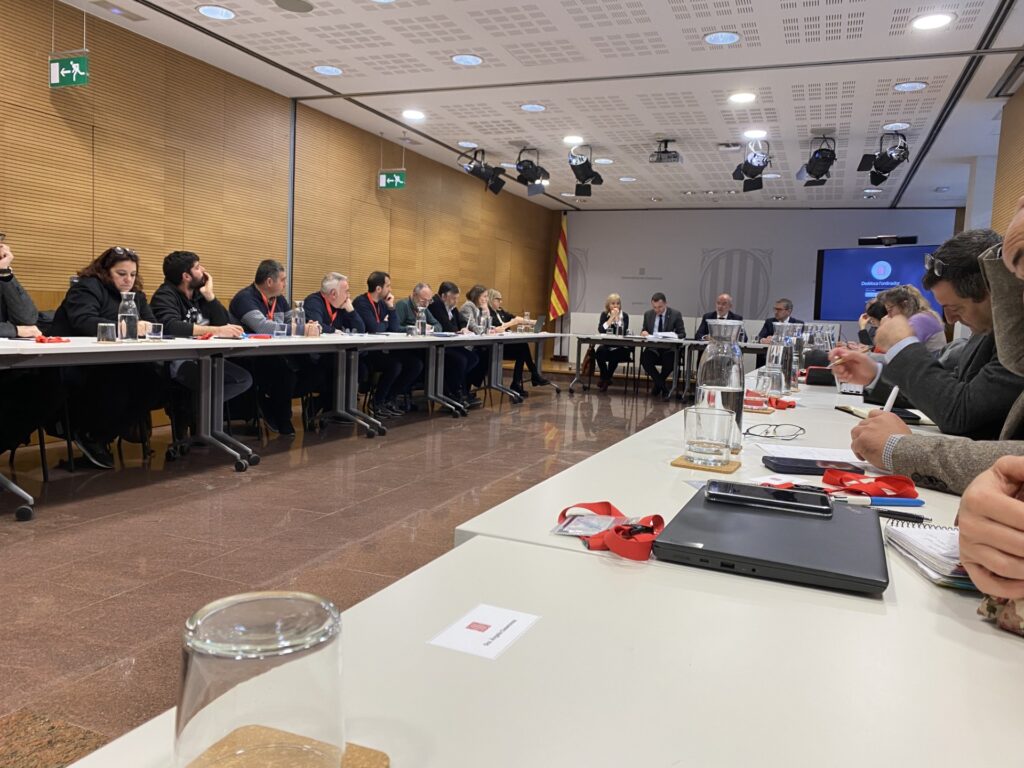
In this context, ANAFRIC has taken part in a meeting with the Government of Catalonia to address the implications of the EU-Mercosur agreement. The meeting was attended by the Minister for Agriculture, Livestock, Fisheries and Food, Òscar Ordeig, and the Minister for European Union and External Action, Jaume Duch.
During the meeting, ANAFRIC conveyed the concerns of the beef sector regarding the potential consequences of the agreement, particularly in relation to the entry of products from third countries that are not subject to the same production, health, environmental and animal welfare standards that apply within the European Union.
Likewise, the association stressed the need to closely monitor the process at European level, now that the European Parliament has decided to refer the agreement to the CJEU, with the aim of defending the interests of the livestock and meat sector and ensuring fair conditions of competition.
A process still open at European level
The European Parliament’s decision to refer the matter to the Court of Justice means that the agreement cannot move forward in its ratification process until a clear legal ruling has been issued. This scenario opens a new phase in which the affected sectors will be able to continue conveying their concerns to public administrations and European institutions.
For ANAFRIC, this period is key to strengthening dialogue with regional, national and European administrations, and to insisting on the need for any international trade agreement to take into account the reality of the European beef sector and to guarantee its long-term economic and productive viability.