
The Governing Council of the Livestock and Meat Network has approved a work plan aimed at boosting the role of livestock and meat farming as a driver of economic and territorial development for rural municipalities that rely on this activity.
The plan comprises four lines of action: developing a map of local initiatives for generational renewal; creating an observatory of administrative barriers; preparing a document of recommendations for integrating livestock farming into local strategies; and producing a report on the role of local entities in strengthening the sector.
These actions are part of the network’s ongoing work and will be carried out in collaboration with the General Secretariat for the Demographic Challenge of the Ministry for Ecological Transition and the Demographic Challenge (MITECO), as they are funded through a specific grant.
Carlos García González, president of the Ávila Provincial Council, is also the president of this network, which includes local entities whose economic activity is based on this productive sector, as well as the association representing companies in this sector. Livestock and meat production contributes nearly €48 billion to the national GDP and generates 672,000 direct jobs.
According to studies, it has almost two million associated jobs, ranging from agricultural production for livestock feed to professionals in the veterinary sector, animal feed and health, logistics and transport, and auxiliary industries.
The Livestock and Meat Network analyzes the future of the sector from a local perspective.
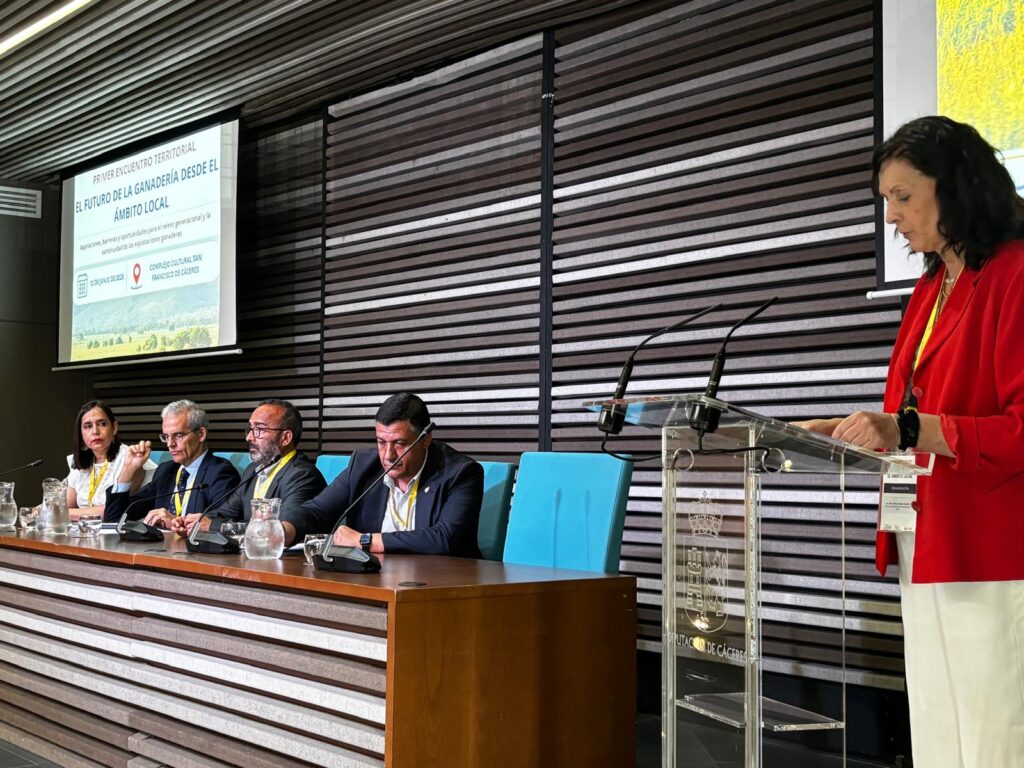
The FEMP’s Livestock and Meat Network held its first Territorial Meeting in Cáceres, focusing on the challenges facing Spanish livestock farming, especially generational renewal and the continuity of farms.
During the event, the importance of placing livestock farming at the heart of the political and social agenda was emphasized, recognizing its key role in job creation, rural population retention, and the sustainability of rural areas.
The Network also presented the preliminary results of surveys conducted within the sector, which identify administrative complexity, access to financing, improving the public image of livestock farming, and the integration of young professionals as the main challenges. As next steps, concrete proposals will be promoted, along with the creation of a Barriers Observatory to help address these issues.