
The end of the summer holidays and the return to work and school routines bring about one of the most significant changes of the year in Spanish household purchasing habits. Among the products regaining prominence in September is meat, with overall consumption typically increasing by around 10%, according to data released by the Spanish Association of Distributors, Self-Service Stores and Supermarkets (ASEDAS).
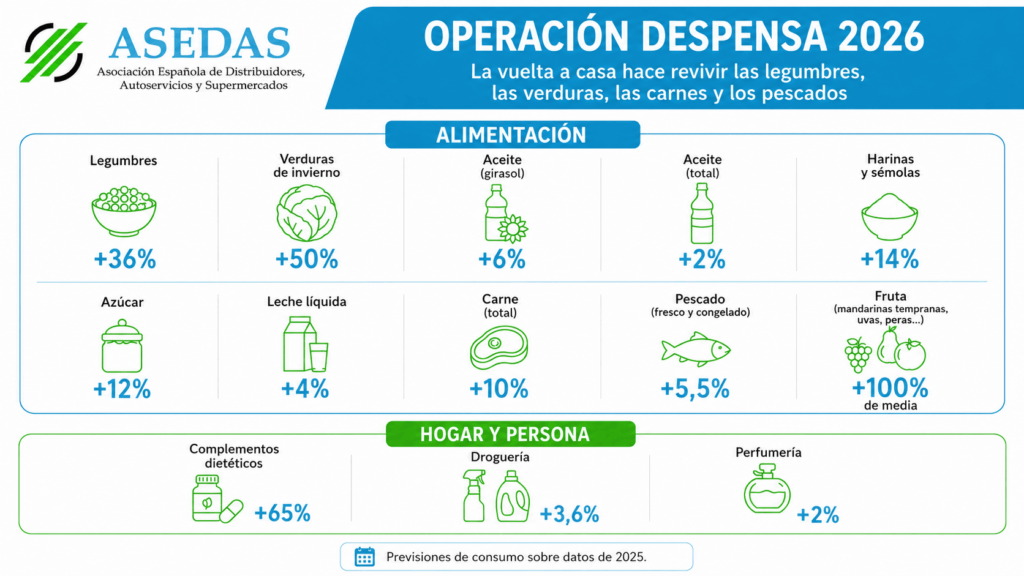
The food retail organisation refers to this period as the “Pantry Operation”, coinciding with millions of people returning to their usual places of residence and the need to restock refrigerators and cupboards. Supermarkets respond to this period by adapting their logistics planning and shelves to significant changes in demand.
One of the main changes is the return to cooking based on ingredients and more elaborate dishes, compared with the more informal eating habits associated with the summer holidays. This trend particularly benefits fresh products. Alongside the 10% increase in meat consumption, fresh and frozen fish consumption rises by 5.5%.
Demand also increases significantly for other foods associated with traditional home cooking. According to ASEDAS, consumption of pulses can rise by around 36% in September, while some vegetables used in warm dishes can see increases of up to 50%.
For ANAFRIC, these figures highlight the continued importance of meat and fresh products in household eating habits. Returning to everyday routines also means returning to home cooking, meal planning and foods that form part of our gastronomic culture.
Origin: ASEDAS – “La vuelta a casa hace revivir las legumbres, las verduras, las carnes y los pescados”