A study published by the European Commission estimates that climate events currently cause annual losses of €28.3 billion to agricultural and livestock farms in the EU. Drought, heat stress, water availability and rising animal feed costs place livestock farming among the activities that will need to strengthen their capacity to adapt.
Climate change is already having direct economic consequences for European agriculture and livestock farming. Rising temperatures, droughts, water scarcity and extreme weather events are changing the conditions in which farms operate and increasing their exposure to new risks.
This is highlighted in the study Study on climate change adaptation in agriculture in the EU, with a focus on water management, prepared for the European Commission’s Directorate-General for Agriculture and Rural Development.
The report estimates that adverse climate events currently cause losses of around €28.3 billion per year to agricultural and livestock farms in the European Union and warns that this economic impact will continue to increase unless adaptation measures are strengthened.
For ANAFRIC, the study is particularly relevant because it shows that livestock farming is one of the activities that must directly face the consequences of climate change. Higher temperatures and prolonged periods of drought affect animal welfare, the availability of water and pasture, forage production and farm feeding costs.
Heat stress, a new challenge for livestock farms
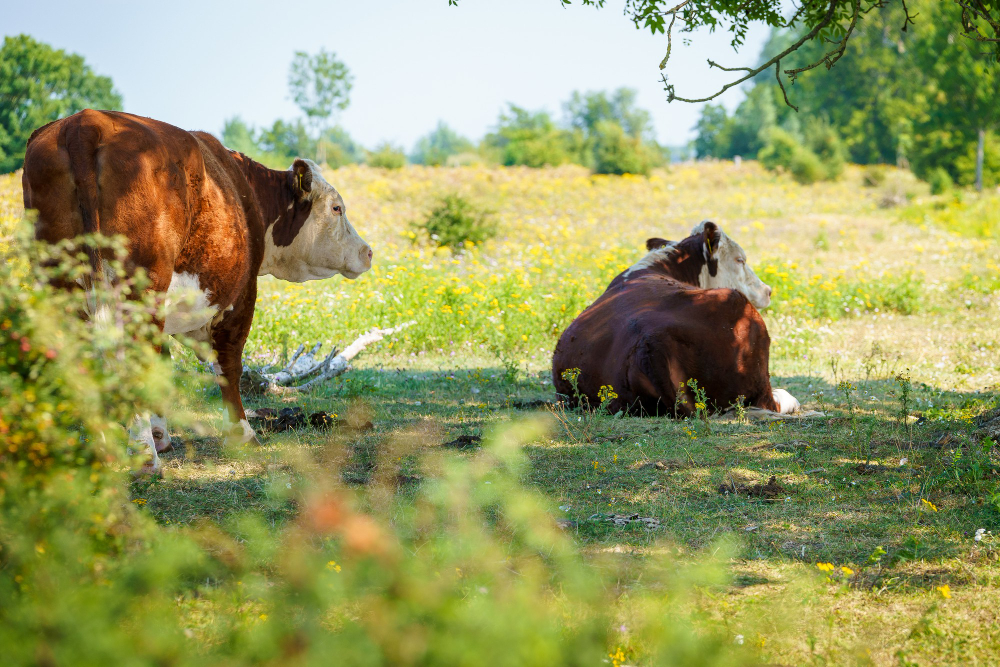
One of the main problems highlighted by the study is the heat stress suffered by animals during periods of high temperatures.
The European Commission identifies different adaptation measures for livestock farms, including improving ventilation in facilities, providing shaded areas, ensuring sufficient water availability, adapting feeding and grazing schedules, modifying certain nutritional strategies or selecting animals and breeds with greater heat tolerance.
In the specific case of dairy cattle, the study makes it possible to quantify the impact: high temperatures can reduce milk production by between 1.5 and 2.5 kg per cow per day, generating significant economic losses during periods of heat stress.
Although the report does not provide an equivalent estimate of the reduction in beef cattle performance, it does propose specific measures for the livestock sector as a whole that highlight the need to prepare farms for increasingly demanding climatic conditions.
Drought also affects the cost of feeding livestock
One of the effects that directly affects livestock farms is the reduced availability of raw materials intended for animal feed.
Droughts and reduced rainfall affect the production of forage and crops intended for livestock feed. The study notes, for example, that lower maize production caused by drought in southern and eastern Europe could lead to increases of between 10% and 15% in silage prices.
This is a particularly significant increase for a sector in which feed represents one of the main production costs.
Faced with this situation, the study points to the need to diversify animal feed sources and examine crops with a greater capacity to adapt to water scarcity conditions.
Among the alternatives analysed is sorghum, whose cultivation in the European Union increased by 34% between 2023 and 2024. Under limited rainfall conditions, it can produce 72.3% more fresh biomass and 43% more dry matter than maize, although the report itself warns that its profitability and suitability depend on the specific conditions of each farm.
Water, shade and adaptation of facilities
Water availability is another of the major challenges for livestock farming in the face of rising temperatures and increasingly frequent droughts.
The report recommends increasing and improving water points in grazing areas, ensuring their availability during periods of heat and adapting facilities to reduce heat stress.
However, these measures also require investment.
The installation of shading systems can cost between €80 and €120 per square metre, while adding new water points in grazing areas can represent around €1,000 per drinking trough. Added to this are potential investments in ventilation, facilities, management or feeding.
However, the study itself considers providing shade for livestock to be a highly effective measure against heat stress and one that can generate benefits related to production, fertility, health and reduced animal mortality.
More than 300 measures to adapt agriculture and livestock farming
The study identifies more than 300 adaptation practices and strategies to address climate change.
In the livestock sector, these include measures such as selecting breeds with greater heat tolerance, diversifying forage resources, creating feed reserves, adapting grazing, improving livestock facilities and using water more efficiently.
The document also warns that many of the measures implemented to date remain reactive in nature, mainly aimed at responding to the immediate effects of droughts, heatwaves or other extreme events. The challenge will be to move towards long-term adaptation and resilience strategies.
Adapting livestock farming also means securing its future
The study estimates, as an indicative figure, that extending adaptation measures across European agriculture could require investments of around €10 billion per year. This figure should be considered in relation to the €28.3 billion already lost each year as a result of climate events.
For ANAFRIC, these figures highlight the need for European climate change policies not to be limited to demanding transformations from the livestock sector, but also to provide the resources needed for farms to adapt.
Ensuring access to water, having sufficient feed for animals, adapting facilities and grazing systems, protecting animal welfare and maintaining the economic viability of farms will become increasingly important issues.
Adapting livestock farming to climate change is not only an environmental challenge. It is also a matter of competitiveness, food security, animal welfare and maintaining economic and social activity in rural areas.