
The white-coated pig sector in Spain continues to work in coordination with government agencies to strengthen its international position and guarantee access to key markets. This was explained by Alberto Herranz, Director General of INTERPORC, on the EFEAGRO podcast.
One of the sector’s main objectives is to get more countries to recognize the regionalization of African Swine Fever (ASF), a mechanism that would allow exports to continue from unaffected areas in the event of outbreaks. Currently, strategic markets such as Japan and the Philippines are the focus of the sector’s efforts to advance this recognition.
This model has already proven effective in China, which agreed to regionalization with Spain before the first outbreak of the disease was detected, thus preventing losses exceeding €1 billion.
Strengthening biosecurity and health surveillance
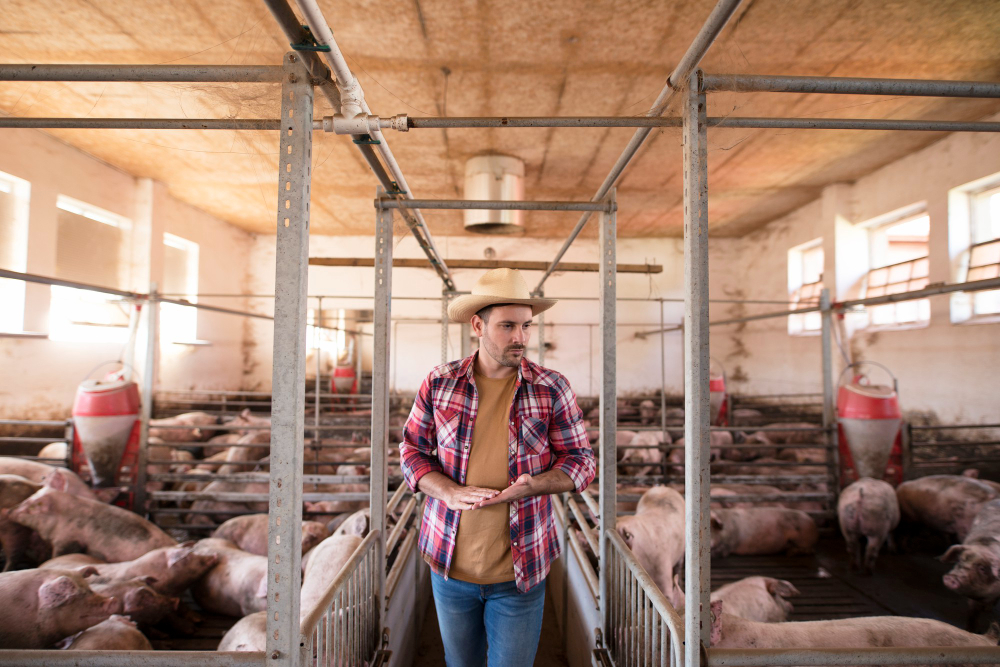
Domestically, the sector maintains constant vigilance regarding the appearance of outbreaks in wild boar, especially in Catalonia. In this context, the need to maintain current measures and continue strengthening biosecurity throughout the value chain is emphasized as a key element for protecting production and ensuring the confidence of international markets.
China and Asia: Key Markets for Spanish Pork
The Chinese market remains the main destination for Spanish exports, where the sector has consolidated a solid position thanks to strong institutional and commercial relations. This alignment has resulted, among other things, in the application of more favorable tariffs for Spain compared to other European Union countries in recent trade investigations.
These relationships represent a key competitive advantage for Spanish pork, which continues to grow in value and diversify its international presence.
Global Uncertainty and Production Costs
The international geopolitical context also influences the sector’s evolution. Tensions such as the conflict in the Middle East or potential blockades in strategic areas like the Strait of Hormuz generate uncertainty and can affect the cost of raw materials, energy, and logistics.
Although some logistical issues have already been detected, the impact has been limited so far. Nevertheless, the sector remains attentive to the evolution of these factors due to their direct influence on competitiveness.
New Business Opportunities
Regarding emerging markets, the United States is emerging as an attractive destination, especially for higher value-added products such as Serrano ham and sliced meats, where growth in both volume and value is expected.
The potential trade agreement between the European Union and Mercosur opens the door to a potential market of more than 270 million consumers. However, the sector insists on the need to guarantee fair competition, applying the same health, environmental, and animal welfare standards.
A Strategic Sector for the Spanish Economy
White-coated pigs are one of the pillars of the Spanish agri-food industry. With a turnover of nearly €25 billion, it represents 9.5% of industrial GDP, exports over €8.5 billion to more than 130 countries, and generates around 415,000 jobs.
In this context, internationalization, animal health, and adaptation to a changing global environment will continue to be key to ensuring the sector’s growth and sustainability.